Cash Flow
Revenue Is Growing, So Why Is Cash Flow Still Tight?
Understand why growing revenue can still create cash pressure through receivables, inventory, and working capital gaps.
On this page
This is one of the most common founder complaints.
Orders are coming in. Revenue is up. The team is busy. Yet bank balance feels stressed every month.
That is not a contradiction. That is usually growth without working capital discipline.
Why growth often hurts cash
Growth usually demands cash before it creates cash.
You buy more raw material. You hold more stock. You give more credit. You hire ahead of collections. Freight and installation costs move first. Customers pay later.
So the business can look stronger on the P&L and weaker in the bank.
Where the cash usually gets trapped
Receivables
Inventory
If planning is loose, sales growth quickly turns into stock growth.
Advances and deposits
Security deposits, booking advances to vendors, and project mobilization costs often get forgotten in cash planning.
Capex hidden inside ambition
A new machine, vehicle, office, or software subscription may be justifiable. But timing still matters.
What founders miss
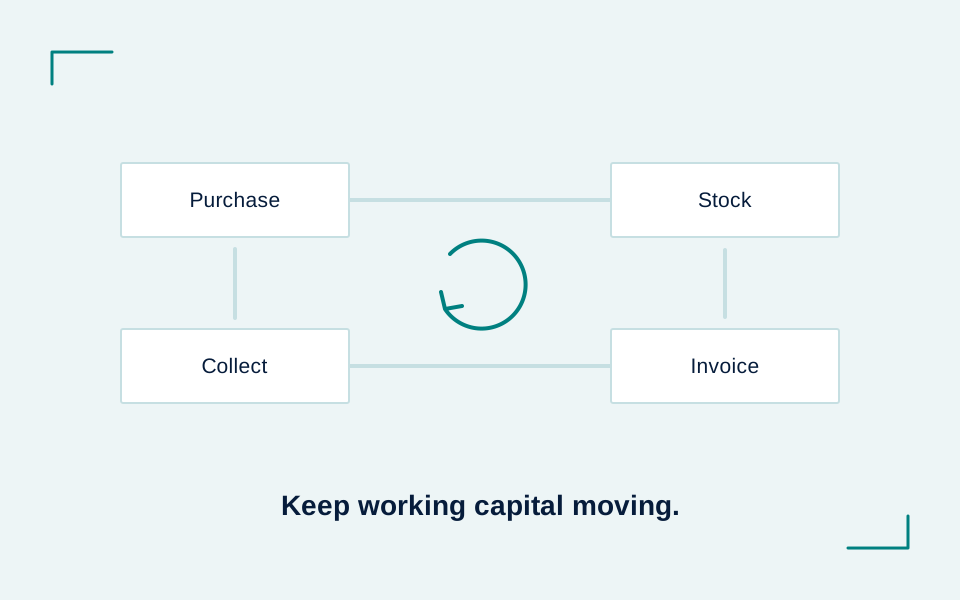
Many teams track sales. Fewer track the full cash conversion cycle.
You should know:
- receivable days
- inventory days
- payable days
- collection efficiency by customer
- cash requirement for each phase of growth
Without this, growth becomes a pressure test.
A simple diagnostic
Ask these questions:
| Question | If answer is unclear, you have a problem |
|---|---|
| Which customers are beyond agreed credit period? | Collections are reactive |
| Which SKUs are slow-moving? | Inventory is carrying dead cash |
| Which vendor payments are truly urgent? | Outflows are not prioritised |
| How much cash is needed in next 30, 60, 90 days? | You are managing by surprise |
What usually fixes it
Tighten billing discipline
Do not delay invoices because operations are busy.
Separate sales from collections ownership
Sales can support, but collections needs a process.
Review inventory by movement, not just value
High value is not the only risk. Slow movement is worse.
Stop approving all payments one by one without a plan
Run a structured weekly payment review.
Use a rolling cash forecast
Not a static annual budget. A live short-term cash view.
The deeper point
Cash stress in a growing business is often not a finance department failure. It is a business design issue.
Pricing, credit terms, purchase planning, billing speed, stock discipline, and approval rules all affect cash.
What to do next
Review three reports this week:
- receivable ageing
- stock ageing or movement analysis
- 13-week cash projection
If these three are weak, fix them before chasing more growth. More sales on top of a weak cash engine usually creates a bigger mess, not a better business.
This information is for educational purposes only and does not constitute professional advice.
If cash pressure is already visible, it usually helps to connect this with a live 13-week view through our Fractional CFO Services, tighter reporting under Accounting & Bookkeeping, or a quick stress test using the Runway Calculator.
This material is general information. Apply it to your business only after checking the relevant facts, source documents and requirements.