Cash Flow
Cash flow management: A founder's guide
Understand operating, investing, and financing cash flows—why profitable businesses can still run out of cash.
On this page
A business can be profitable on paper and still run out of cash. Cash flow is about when money moves, not just how much you earn. Understanding this distinction is critical for survival.
The Three Buckets of Cash Flow
Operating Cash Flow (The Engine) represents money from your core business—collections from customers, payments to suppliers, salaries, rent.
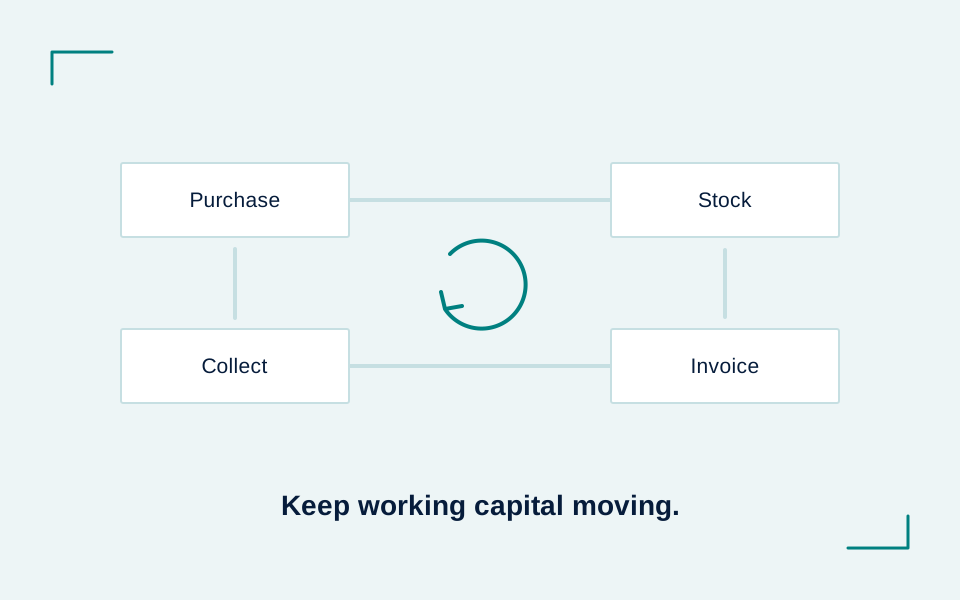
Key indicators include receivables days (are customers paying on time?), inventory turns (is stock moving or sleeping?), and payables management (are you balancing relationships with cash timing?).
If operating cash is consistently positive, your business model works. If chronically negative, profits may be stuck in receivables or inventory.
Investing Cash Flow (Building Capacity) represents cash spent on assets—machinery, computers, equipment, deposits. This is typically negative as growing businesses invest in future capacity.
Financing Cash Flow (Fueling Growth) includes loans coming in, repayments going out, capital introduced, and drawings taken. This funds the gap between operations and investments.
Why Growth Eats Cash
When sales increase, you often need more inventory (upfront), more credit to customers, and more staff and infrastructure—all before the cash arrives. Fast growth can feel cash-tight even when profitable.
The 13-Week Cash Flow View
Create a simple rolling forecast with columns for Week, Cash In, Cash Out, Net, and Balance. Update weekly. Add notes like "₹2.4L from Client A expected Wednesday", "GST payment due 20th", "Quarterly advance tax".
Practical Levers You Control
Speed up inflows by invoicing same day as delivery/service, establishing a collections rhythm (call, don't just email), offering small early-payment incentives, and reviewing credit terms by customer risk.
Slow down outflows by batching payments on fixed weekly runs, negotiating supplier terms where possible, phasing out slow-moving inventory, and reviewing subscriptions and recurring costs.
Warning Signs
Watch for operating cash consistently negative, receivables days increasing quarter over quarter, reliance on debt to fund operations, and frequent need for emergency credit.
The Weekly Finance Ritual (30 minutes)
Allocate 10 minutes for cash in bank vs expected collections this week, 10 minutes for ageing review with top 10 receivables and next actions, and 10 minutes for purchases pending approval plus outstanding vendor payments.
Key Takeaway
Cash flow management is not a monthly exercise—it is a weekly conversation with your business. The businesses that survive their first three years typically do so because they treat cash with discipline, not because they were more profitable.
This information is for educational purposes only and does not constitute professional advice.
If cash pressure is already visible, it usually helps to connect this with a live 13-week view through our Fractional CFO Services, tighter reporting under Accounting & Bookkeeping, or a quick stress test using the Runway Calculator.
This material is general information. Apply it to your business only after checking the relevant facts, source documents and requirements.